SCHOOLBOY RUNAWAY - STEALTH
- 3.9
- Rating
- 50.00M
- Installs
- Free
- Price

 Analysis by App-foxy
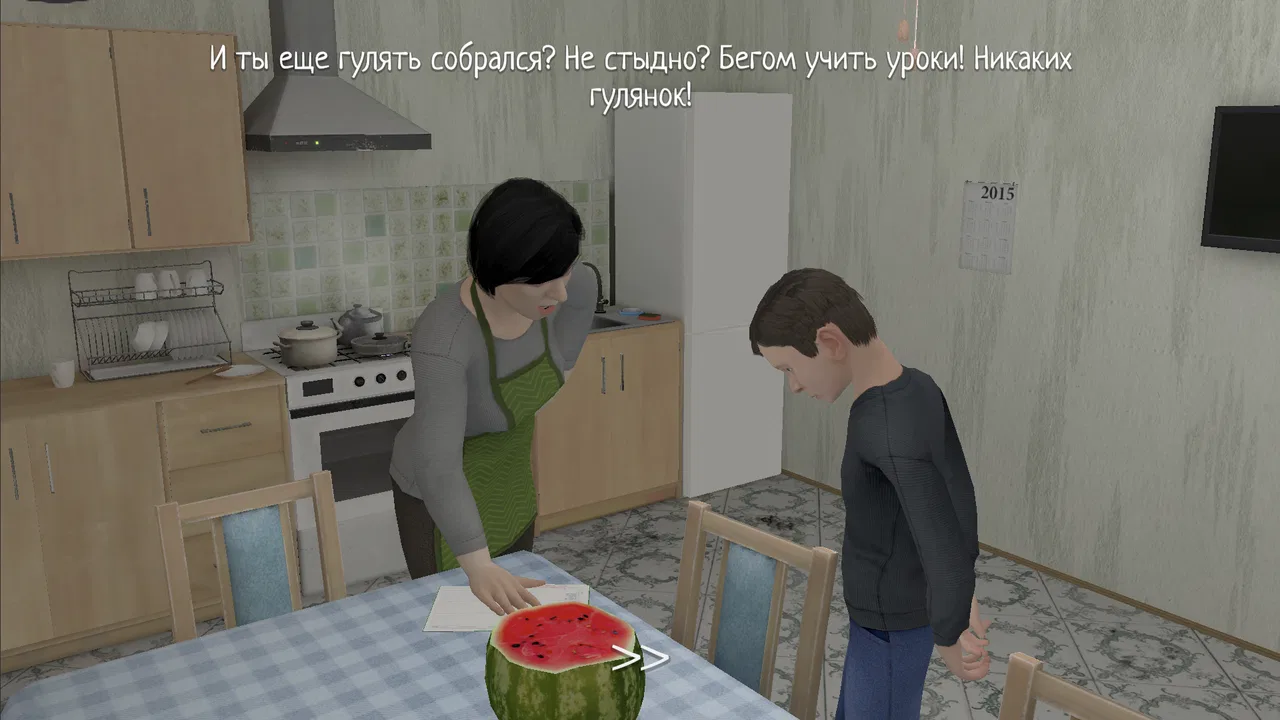
I went into Schoolboy Runaway - Stealth expecting a quick arcade distraction, but its appeal is more specific than that. You play a schoolboy trying to get out of the house while avoiding parental attention, so the central challenge is not simply moving fast. It is watching, waiting, choosing a route, and deciding whether the next step is worth the risk. That makes it a better fit for players who enjoy short stealth puzzles than for anyone looking for a traditional action game.
The basic idea is easy to understand, yet the tension comes from turning an ordinary home into a space full of danger. A hallway, doorway, or moment of hesitation can matter because being noticed changes the whole attempt. I like that the premise gives the game an immediate personality without requiring a long explanation. It also makes each escape feel more like a small problem to solve than a race to the finish.
How the current version feels to play
Linked Squad presents this as an arcade game, but I would describe the experience as a compact stealth challenge with arcade pacing. The controls and objective are approachable enough for a casual session, while the need to observe patterns adds a little more thought than I usually expect from this category. You are not just reacting to obstacles; you are trying to understand when movement is safe.
You May Also Like

 Blood Strike: 2.5 Anniversary
Blood Strike’s Loadouts Turn Every Drop Into a Tactical Gamble
A close look at Blood Strike’s custom loadouts: how fast access to signature weapons reshapes its battle royale rhythm, rewards preparation, and narrows the gap between fights.

 Pandora - Music & Podcasts
Pandora’s Music Is Easy to Start, but Harder to Recover
Pandora’s strength is its low-effort path from a seed to a station. Its weak spot is how much confidence it asks you to place in connection, setup, and quiet recovery.

 8 Ball Pool
 Is Built on Rivalries, Rematches, and Routine
A close look at the rivalries, rematches, shared routines, and unanswered safety questions that turn a quick pool match into a persistent mobile community.

 Samsung Music
’s Quiet Strength Is Playing What You Already Own
Its reach comes less from spectacle than from dependable access to a personal library. That simplicity is both the app’s strongest retention engine and its ceiling.

 AccuWeather: Weather Radar
AccuWeather Review: A Quick, Clear Forecast for Everyday Decisions
For everyday plans, the best forecast is the one you can understand quickly. AccuWeather makes rain timing, radar, and local conditions easy to act on, with a few trade-offs.

 Hill Climb Racing
Why Hill Climb Racing Still Turns Crashes Into One More Run
A tiny car, a bumpy hill and one more upgrade: Hill Climb Racing keeps resurfacing because its simple chaos makes every near-miss feel personal.
More From Our News Desk
View All News


The strongest part of the design is the contrast between the simple goal and the awkward decisions needed to reach it. Leaving immediately may be tempting, but careful players will usually do better by pausing and reading the situation first. That creates a useful rhythm: observe, move, hide or adjust, then continue. It is especially effective when I play for a few minutes at a time because the game gives me a clear objective without demanding a long commitment.
That simplicity also creates the main limitation. If you want deep character development, a large world, or a complicated inventory system, this is not trying to provide those things. Its appeal depends on whether the small-scale escape scenario remains entertaining after repeated attempts. For me, the answer is yes in short bursts, although I would not treat it as a substitute for a full stealth adventure.
The game is free, which makes trying it easy, and its Teen content rating is worth keeping in mind for families deciding whether it suits a younger player. It was released on June 16, 2024, and the current version is 1.03. Those details place it in a relatively early stage compared with long-established mobile games, so I see the present release as a snapshot of the experience rather than a promise of a large, constantly expanding platform.
A useful way to approach each escape
My most practical advice is to stop treating every attempt like a sprint. The first try is better used as reconnaissance. Watch how the household responds, notice which areas feel exposed, and identify moments when movement is less risky. Even when an attempt fails, it can still be useful if you learn something about timing instead of repeating the same route immediately.
A second helpful habit is to separate impatience from urgency. The game’s premise makes you feel as though you must leave at once, but rushing often removes the information you need. I found that a brief pause before crossing an open area can be more valuable than moving continuously. This is one of the less obvious strengths of the design: the game rewards restraint, even though its arcade label might suggest constant action.
I also recommend changing one decision at a time after a failure. If you alter the route, timing, and movement style together, it becomes difficult to understand what actually worked. Trying a different moment while keeping the rest of the plan similar turns each attempt into a small experiment. That approach makes the repeated-play structure feel less random and more like learning.
What the release information tells us
The developer is Linked Squad, and the game has already attracted a substantial mobile audience, with over 10 million installs. It holds a 4.0 average from around 468 thousand ratings, alongside roughly 3.4 thousand written reviews. I would read those figures as evidence that the premise connects with many players, while the rating also suggests that the experience will not satisfy everyone equally.
The current version number, 1.03, is important mainly because it sets expectations. This is not a product I would approach assuming years of refinement or a huge collection of systems. The sensible way to judge it is by how well its central stealth loop works now: can it make observation, movement, and escape feel satisfying during a short session? In my experience, that focused loop is where the game has its clearest identity.
There is a difference between a version update and a complete change in direction. Nothing about the current release makes me think the game should be evaluated as a broad stealth sandbox. Its value is in the compact scenario and the immediate feedback from each choice. Players who enjoy that foundation will probably appreciate a polished continuation of it more than an attempt to turn it into an entirely different genre.
It runs on Android from version 5.1 onward, which keeps the compatibility requirement relatively accessible for people using older devices. That does not guarantee identical performance on every phone, but it does mean the game is not positioned only for recent hardware. For a casual title built around quick attempts, broad device access is a practical advantage.
Who will enjoy it most
I would recommend Schoolboy Runaway - Stealth to players who like sneaking, timing, and trial-and-error challenges but do not want to learn a complicated control scheme. It is also a good choice for someone who enjoys humorous or unusual premises. The schoolboy-and-parents setup gives the game a lighter, more personal tone than a military stealth game or a serious spy thriller.
It works particularly well in everyday situations where you have a short break: while waiting for transport, during a coffee break, or when you want something more engaging than a passive video. A typical session might involve a few attempts, with each failure showing you that a particular crossing or decision needs a different approach. You can put it down without losing a long story thread, then return later with the same immediate goal.
That convenience is also useful for players who dislike games that bury the main objective under menus. Here, the premise tells you what you are trying to accomplish from the beginning. The challenge is not understanding a complex plot; it is working out how to turn a risky escape into a successful one.
I would be more cautious about recommending it to players who need constant novelty. If your favorite arcade games provide endless score chasing, rapid reflex tests, or a large variety of modes, this may feel narrow. Likewise, anyone expecting a detailed family simulation should look elsewhere. The parents are part of the stealth problem, not the beginning of a broad social or life-management game.
How it compares with familiar alternatives
Compared with a conventional endless runner, this game asks for more patience and less automatic movement. An endless runner usually measures how long you can survive while reacting quickly to obstacles. Here, the important question is often whether you should move at all. That makes it a better choice for players who enjoy reading a situation, but a weaker choice for someone who wants uninterrupted speed.
Compared with larger stealth games, the attraction is accessibility. You do not need to master a substantial skill tree, memorize a large map, or manage a long list of tools before the premise becomes enjoyable. The trade-off is scope. A full stealth adventure can offer multiple approaches, richer environments, and a stronger sense of progression, while this game concentrates on the immediate satisfaction of getting past the next problem.
It also differs from ordinary puzzle games because the solution is not necessarily a fixed sequence that you discover once. Timing and awareness matter, so the experience can feel more active than a static logic puzzle. However, players who prefer carefully authored brainteasers with no pressure may find the stealth framing less comfortable, especially when a mistake forces another attempt.
My recommendation between these alternatives is straightforward. Choose this one when you want a funny, focused escape challenge that starts quickly. Choose an endless runner when reflex speed is the main attraction. Choose a larger stealth title when you want story, exploration, and long-term progression. The game knows its lane, and it is most enjoyable when you judge it within that lane.
Where the experience still has friction
The repeated-attempt structure can become tiring if progress feels too dependent on guessing rather than learning. Stealth games need to make failure informative. When I understand why I was spotted, I am willing to try again; when the result feels unclear, the same restart can feel like busywork. That is the first area I would watch closely as the game evolves.
The narrow premise may also limit its staying power. Escaping from home is immediately understandable, but the concept has to keep producing interesting decisions after the novelty fades. Players who enjoy the first few sessions should ask themselves whether they like the underlying process of observing and timing, not merely the amusing setup. If the answer is no, a different arcade game may offer more lasting variety.
Another point is audience fit. The Teen rating means I would not hand it to a child without checking whether the tone and situations are appropriate for that particular family. The title sounds playful, but the rating should guide the decision more than the cartoon-like premise. For older players, this is unlikely to be a concern; for parents choosing a game, it is a detail worth noticing before installation.
Because the game is free, it is easy to test without making a financial commitment. That lowers the risk of discovering that the focused format is not for you. At the same time, free mobile games can be less comfortable for players who prefer a completely uninterrupted experience, so anyone sensitive to interruptions should approach with realistic expectations rather than assuming that no-cost means frictionless.
What existing players should expect from its evolution
For someone already playing, the current release is best understood as a foundation rather than a reason to abandon the core strategy. The most valuable improvements would be those that make each failure easier to interpret, keep routes interesting, and preserve the quick-start nature of the game. Expanding the experience is useful only if it strengthens the stealth decisions instead of adding unrelated complexity.
I would especially welcome clearer distinctions between a genuinely bad choice and a premature one. Those are different lessons for the player. A bad route may need to be abandoned, while a premature move may succeed with better timing. When a game communicates that difference through its reactions and pacing, repeated attempts feel fairer and more rewarding.
Existing users should also judge updates by consistency rather than by size alone. A large addition would not automatically improve this particular game if it weakened the compact escape loop. Small refinements to movement, awareness, or the readability of danger could matter more than a collection of new distractions. That is the kind of evolution that would make me return regularly.
What I would watch before recommending it widely
The first thing I would watch is how well the game maintains variety within its central situation. The premise is strong enough to attract attention, but long-term enjoyment depends on whether the decisions continue to feel meaningful. If every successful attempt eventually becomes a memorized routine, the arcade appeal will shrink for experienced players.
I would also pay attention to how the game treats newcomers. A good stealth challenge can be demanding without being mysterious. Players should be able to learn from mistakes, understand the risks around them, and improve through observation. That balance matters more here than adding elaborate systems, because the entire experience rests on the clarity of a small number of choices.
Finally, I would look for signs that future development respects the game’s tone and scale. The light domestic setting is part of what makes it memorable. Turning it into a generic action title would remove the unusual character that separates it from countless other mobile arcade releases. The best path forward, in my view, is deeper use of the existing idea rather than a louder or more complicated version of it.
My recommendation
After spending time with it, I see Schoolboy Runaway - Stealth as a focused free arcade game that succeeds when you enjoy careful movement more than frantic reflexes. Its strongest qualities are the instantly readable premise, the short-session format, and the satisfaction of learning from a failed escape. It is easy to pick up, but it rewards a more thoughtful approach than the simple setup might suggest.
I would install it if you want a compact stealth challenge for occasional play, especially if you like unusual everyday settings and repeated attempts with gradual improvement. I would skip it if you need a large campaign, extensive customization, or nonstop action. The current version has a clear identity, and that identity is both its advantage and its boundary.
In the end, the game is most convincing when I stop rushing and treat each escape as a small observation exercise. That is the advice I would give a friend: try it for the premise, stay for the timing, and decide based on whether learning the household’s rhythm feels rewarding. If it does, this modest arcade title can provide more tension and personality than its straightforward objective initially suggests.
FAQs for SCHOOLBOY RUNAWAY - STEALTH
01What is the main objective of Schoolboy Runaway - Stealth?
Schoolboy Runaway - Stealth is a thrilling game where you play as a schoolboy trying to escape from school without getting caught. The main objective is to navigate through various levels, avoiding teachers and other obstacles, by utilizing stealth and strategy. Each level presents new challenges and requires careful planning to successfully escape.
02Are there in-app purchases in Schoolboy Runaway - Stealth?
Yes, Schoolboy Runaway - Stealth includes in-app purchases that allow players to buy additional items and upgrades. These can enhance gameplay by unlocking new abilities or levels, but they are optional and not necessary to complete the game. Players can enjoy the entire game without spending money, although purchases can offer extra convenience.
03How does the game's difficulty progress?
The difficulty in Schoolboy Runaway - Stealth increases as players advance through the levels. Early stages serve as an introduction to the game's mechanics, while later levels become more complex with additional obstacles and smarter AI. This gradual progression allows players to develop their skills and strategies, providing a balanced challenge throughout the game.
04What are the system requirements for Schoolboy Runaway - Stealth?
Schoolboy Runaway - Stealth is compatible with both Android and iOS devices. It requires Android version 5.0 and up or iOS 10.0 and later. The game is optimized for a range of devices, but for the best experience, a device with at least 2GB of RAM and a decent processor is recommended to ensure smooth gameplay.
05Can Schoolboy Runaway - Stealth be played offline?
Yes, Schoolboy Runaway - Stealth can be played offline, making it perfect for gaming on the go without the need for a constant internet connection. However, certain features, like in-app purchases and leaderboards, will require an internet connection to function. Offline play ensures that users can enjoy the game anytime and anywhere.
Pros
- Engaging stealth mechanics add excitement.
- Visually appealing graphics and design.
- Intuitive controls for smooth gameplay.
- Challenging levels keep players hooked.
- Creative storyline with unexpected twists.
Cons
- Occasional bugs disrupt the experience.
- Limited character customization options.
- Ads can be intrusive during gameplay.
- Requires constant internet connection.
- Some levels may feel repetitive.

SCHOOLBOY RUNAWAY - STEALTH
Gallery